You are replacing an aging AC, the furnace is getting older too, and a contractor has mentioned a heat pump. It sounds appealing because one system can handle both heating and cooling. But before you replace two pieces of equipment with one, you want to know whether a heat pump actually makes sense for your San Antonio home.
The answer depends on more than the weather. Your current heating system, ductwork, home layout, comfort problems, electricity use, and replacement budget all play a role. This guide explains when a heat pump can be a practical choice, when keeping a furnace may make more sense, what can affect installation costs, and what to ask before approving the work.
Why Is a Heat Pump Worth Considering in San Antonio?
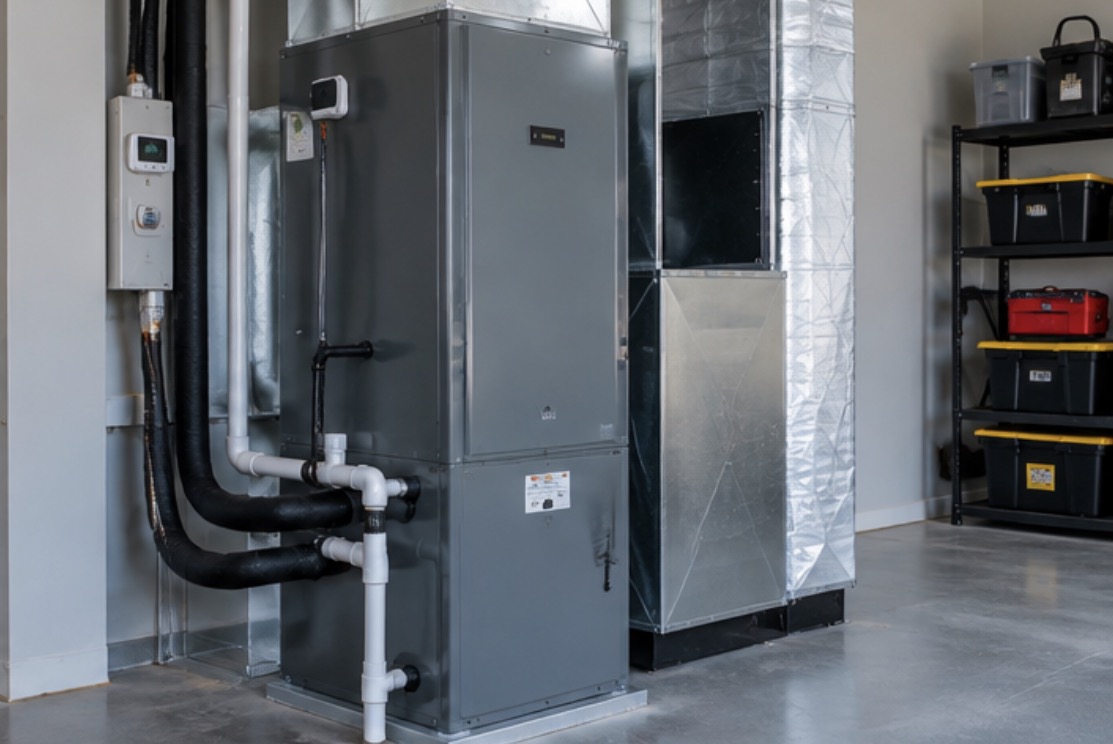
San Antonio homeowners spend a large part of the year thinking about cooling rather than heating. That makes a system capable of handling both jobs worth considering when an older AC or furnace is approaching replacement.
A heat pump works like an air conditioner when your home needs cooling, then reverses the refrigeration cycle to provide heat. Instead of burning fuel to create heat, it moves available heat from outside into the house. When the equipment is properly sized and installed, that makes an air-source heat pump an efficient option for both heating and cooling.
That does not mean a heat pump is automatically the right replacement for every San Antonio home. If your existing furnace is relatively new and reliable, replacing it simply to install a heat pump may not make financial sense. If both your AC and furnace are aging, however, the comparison becomes much more interesting.
Does Your Current Heating System Change the Decision?
The type of heat your home uses today can make a big difference in whether switching to a heat pump is worthwhile.
For example, homeowners using electric resistance heat have a different opportunity than homeowners with a newer gas furnace. A heat pump moves heat instead of creating it directly with electric resistance, so replacing resistance heating can offer a significant efficiency improvement. If you already have a dependable gas furnace, keeping it as part of a dual-fuel system may be another option.
Your situation may look something like this:
| Current HVAC Setup | What to Consider |
|---|---|
| Electric resistance heat | Compare potential heating-energy savings |
| Aging AC and furnace | Compare a heat pump with replacing both systems |
| Newer gas furnace | Consider keeping the furnace |
| Aging AC, good furnace | Compare heat pump with AC-only replacement |
| Frequent repairs | Compare repair costs with complete replacement |
The important thing is to look at the equipment you already own. A heat pump should solve a real problem or provide a meaningful improvement, rather than becoming an expensive upgrade simply because it is newer technology.
Will a Heat Pump Keep Your Home Comfortable During San Antonio Winters?

San Antonio’s winters are generally much less demanding than the cooling season, but homeowners still want to know what happens when a strong cold front moves through.
A heat pump’s heating capacity changes as outdoor conditions change. That is why the specific equipment matters more than simply hearing that a heat pump “works in Texas.” When comparing systems, ask the contractor to show you the manufacturer’s heating-capacity information at lower outdoor temperatures and explain when the system may need supplemental heat.
For some installations, backup electric heat strips are used. A dual-fuel system can also pair the heat pump with a gas furnace. The right setup depends on the home, the equipment selected, and how much heating capacity the house actually needs.
If your system uses heat strips, it helps to know two thermostat settings. Auxiliary heat turns on automatically when the heat pump needs help, such as during a cold snap or after a large thermostat setback. Emergency heat is a manual setting that shuts off the heat pump and runs only the backup heat, which costs considerably more to operate. If you find yourself relying on emergency heat, the system should be checked.
What Does a Heat Pump Feel Like Day to Day?
Homeowners switching from a gas furnace sometimes notice a few differences during the first winter. Most of them are normal.
- Warm, not hot, air: A heat pump typically delivers supply air around 90 to 110°F, which is milder than a furnace. It heats the home with longer, steadier cycles instead of short blasts of hot air.
- Steam from the outdoor unit: In cold, damp weather the system runs short defrost cycles. A cloud of vapor and a change in sound during defrost are normal.
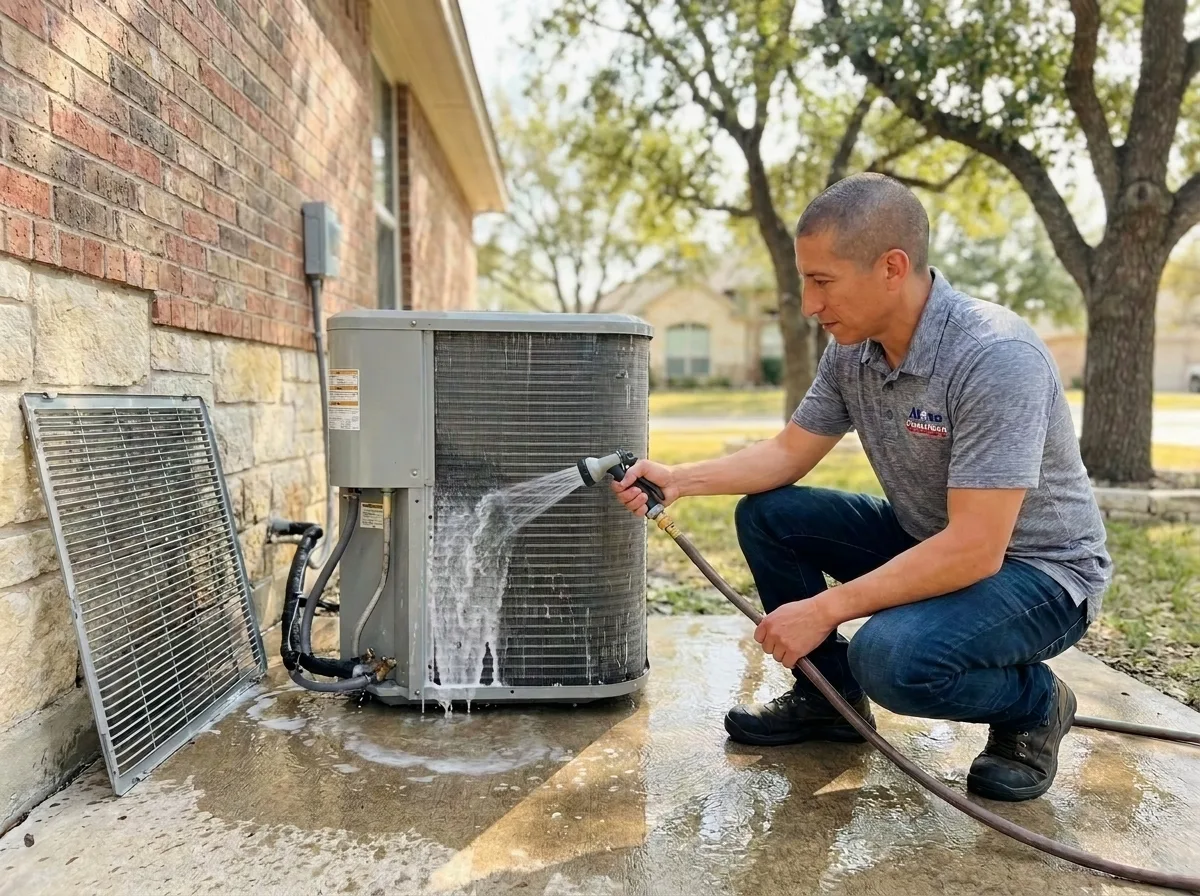
- Ice that does not clear: Light frost is normal, but heavy ice that stays on the outdoor coil is not. Do not chip at it or pour hot water on it, since that can damage the fins and tubing. Schedule heat pump repair if the ice never clears.
- Year-round maintenance: Because a heat pump both heats and cools, it runs in every season. Spring and fall maintenance visits are common, and a heat pump often lasts roughly 10 to 15 years, compared with 15 to 20 for many gas furnaces.
Could Your Ductwork Affect Whether a Heat Pump Works Well?
Your ductwork deserves attention before you put new equipment in the house. If the current system has weak airflow, rooms that stay warmer than others, or obvious duct problems, installing a new heat pump without addressing those issues can leave you with the same comfort complaints.
This is especially important in homes where ductwork runs through the attic. Leaky connections, damaged insulation, crushed sections, or inadequate return airflow can make it harder for the HVAC system to deliver conditioned air where it belongs.
A contractor should evaluate the duct system along with the equipment and handle any needed ductwork repair before the new heat pump goes in. Sealing leaks and fixing restrictions first gives the new equipment a fair chance to perform the way it was rated.
What If Your Home Does Not Have Good Ductwork?
A home with limited or poorly designed ductwork does not automatically rule out a heat pump. It may simply mean that a different configuration makes more sense.
Ductless mini-split heat pumps can provide heating and cooling without relying on a traditional central duct system. That can be useful for an older home in neighborhoods like Alamo Heights or Terrell Hills, a room addition, a converted garage, or a space that has always been difficult to condition.
A central ducted heat pump may still be the better choice when the existing ductwork is in good condition and can support the new equipment. The decision should follow the layout of your home rather than forcing the home to fit a particular HVAC configuration.
How Do You Know What Size Heat Pump Your Home Needs?
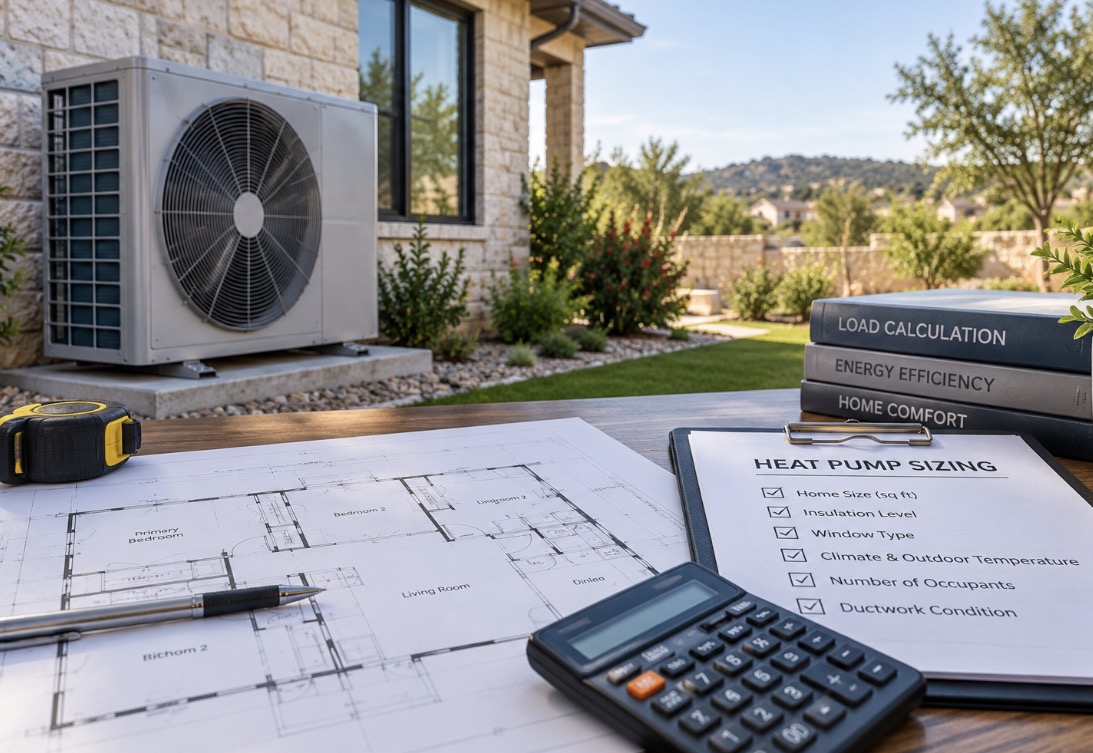
The old AC’s tonnage is not a reliable way to determine the size of a new heat pump.
Maybe the previous system was oversized. Maybe you have replaced windows, improved insulation, added conditioned space, or changed the way your family uses the home. All of those things can affect the heating and cooling load.
A proper Manual J load calculation looks at the actual characteristics of the house, including insulation, windows, orientation, and duct location. It should be the first step in any heat pump installation, because a system that is too large or too small can struggle to provide the comfort homeowners expect.
Oversizing can create problems during the cooling season. A system that reaches the thermostat setting too quickly may shut off before running long enough to remove the moisture that makes San Antonio summers feel uncomfortable. Getting the size right is about more than efficiency. It affects how the house actually feels.
How Much Does a Heat Pump Cost in San Antonio?
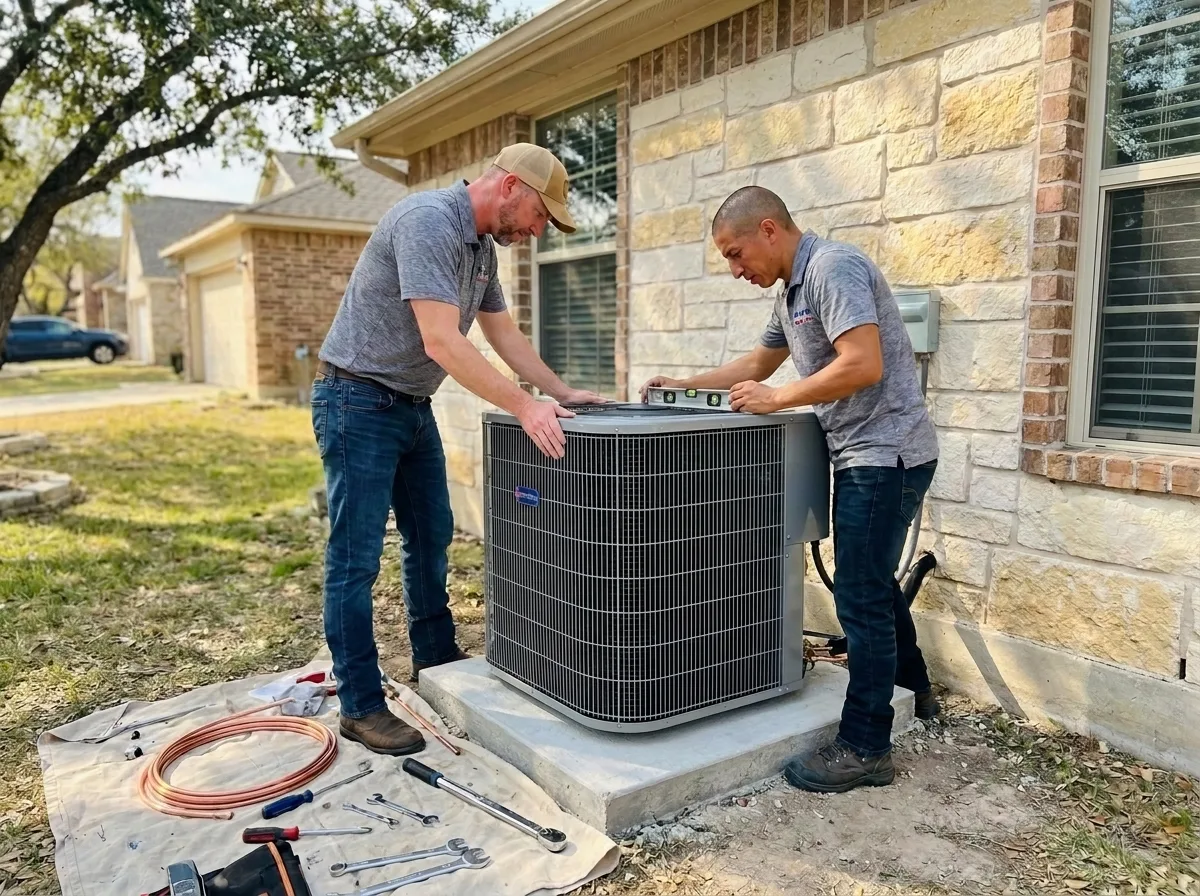
The installation price depends heavily on what your home needs. You are not simply buying an outdoor heat pump. The project can include the indoor air handler, thermostat and controls, electrical work, refrigerant lines, duct modifications, permits, removal of existing equipment, and other installation requirements.
For that reason, heat pump installation can reach the five-figure range for a complete replacement, particularly when homeowners choose higher-efficiency equipment or the installation requires additional work. Your actual quote may be considerably different depending on the equipment and condition of the home.
| Cost Factor | Why It Matters |
|---|---|
| Equipment size | Larger systems generally require more equipment |
| Efficiency rating | Higher-efficiency models can cost more upfront |
| Ductwork | Repairs or modifications add installation work |
| Electrical system | Some homes may need electrical changes |
| Controls | Certain systems require compatible thermostats |
| Existing furnace | Keeping it may create a dual-fuel installation |
| Installation access | Attic and equipment location affect labor |
When comparing quotes, look at the complete installed price. A lower equipment price does not tell you much if another contractor has included duct repairs, electrical work, or other necessary items that the first quote left out.
Does a Higher Efficiency Rating Always Make a Heat Pump a Better Buy?
You will usually see two important efficiency ratings when comparing heat pumps: SEER2 for cooling and HSPF2 for heating. These ratings give homeowners a standardized way to compare the efficiency of different systems. ENERGY STAR’s current qualifying criteria for split-system heat pumps include at least 15.2 SEER2 and 7.8 HSPF2.
But buying the system with the highest number is not automatically the best financial decision. A higher-efficiency model can cost more upfront, and the additional savings depend on how much you use the system, your utility rates, the home’s performance, and how long you plan to own it.
Ask your contractor to show you the difference between two or three equipment options. Seeing the equipment price, efficiency rating, installation cost, warranty, and expected operating differences side by side makes the decision much easier than simply being told that one system is more efficient.
What Can Keep a New Heat Pump From Performing as Expected?
A new heat pump should not be judged by the equipment rating alone. Installation quality has a major effect on how the system performs once it is actually running in your home.
A system can struggle if it is oversized, connected to restricted ductwork, paired with inadequate airflow, or not properly matched and commissioned. The same applies to refrigerant charge and controls. A high efficiency rating on the equipment label cannot overcome a poor installation.
This is why a good replacement evaluation looks at the entire system rather than just recommending a model. The goal is to make sure the equipment, ductwork, controls, airflow, and home are working together.
When Does Replacing Your AC and Furnace With a Heat Pump Make Sense?
The condition of your existing equipment is one of the biggest factors in this decision.
If your AC is failing but your furnace is relatively new, there may be little reason to replace both. You could repair the AC or handle an AC replacement and continue using the furnace. But if both systems are getting older, repairs are becoming more frequent, and you are already facing a major replacement expense, a heat pump deserves a closer look.
A few situations make the comparison especially useful:
- Your AC and furnace are both approaching replacement age
- Your current system requires frequent repairs
- You are using electric resistance heating
- You want one system for year-round heating and cooling
- Your existing AC has poor efficiency and comfort performance
- You are already planning a complete HVAC replacement
Here is how the two options compare side by side:
| Factor | Heat Pump | AC + Furnace |
|---|---|---|
| Heating and cooling | One system handles both | Separate equipment |
| Existing gas furnace | May not be needed | Remains part of the system |
| Electric resistance heat | Can provide a more efficient alternative | Resistance heat remains |
| Ductwork | Still important for ducted systems | Still important |
| Backup heat | May use electric strips or furnace | Furnace provides heat |
| Replacement situation | Particularly relevant when both systems are aging | Familiar option for many homes |
The decision should still be based on the numbers for your home. A heat pump is not automatically cheaper simply because it combines heating and cooling into one system. If one system still has plenty of useful life, replacing both may not be necessary.
What Should You Ask Before Choosing a Heat Pump?
Before approving an installation, you should understand why the contractor recommended that particular system for your house. A quote that only lists a model number, system size, and price leaves out some of the information you need to make a confident decision.
Ask questions such as:
- Was a load calculation performed for my home?
- Why is this heat pump the right size for my house?
- What are the SEER2 and HSPF2 ratings?
- How much heating capacity does it provide in colder weather?
- Will my existing ductwork be inspected?
- Will I need electrical modifications?
- What happens when supplemental or backup heat is needed?
- Which thermostat and controls are compatible?
- What maintenance will the manufacturer require?
- What exactly is included in the installation price?
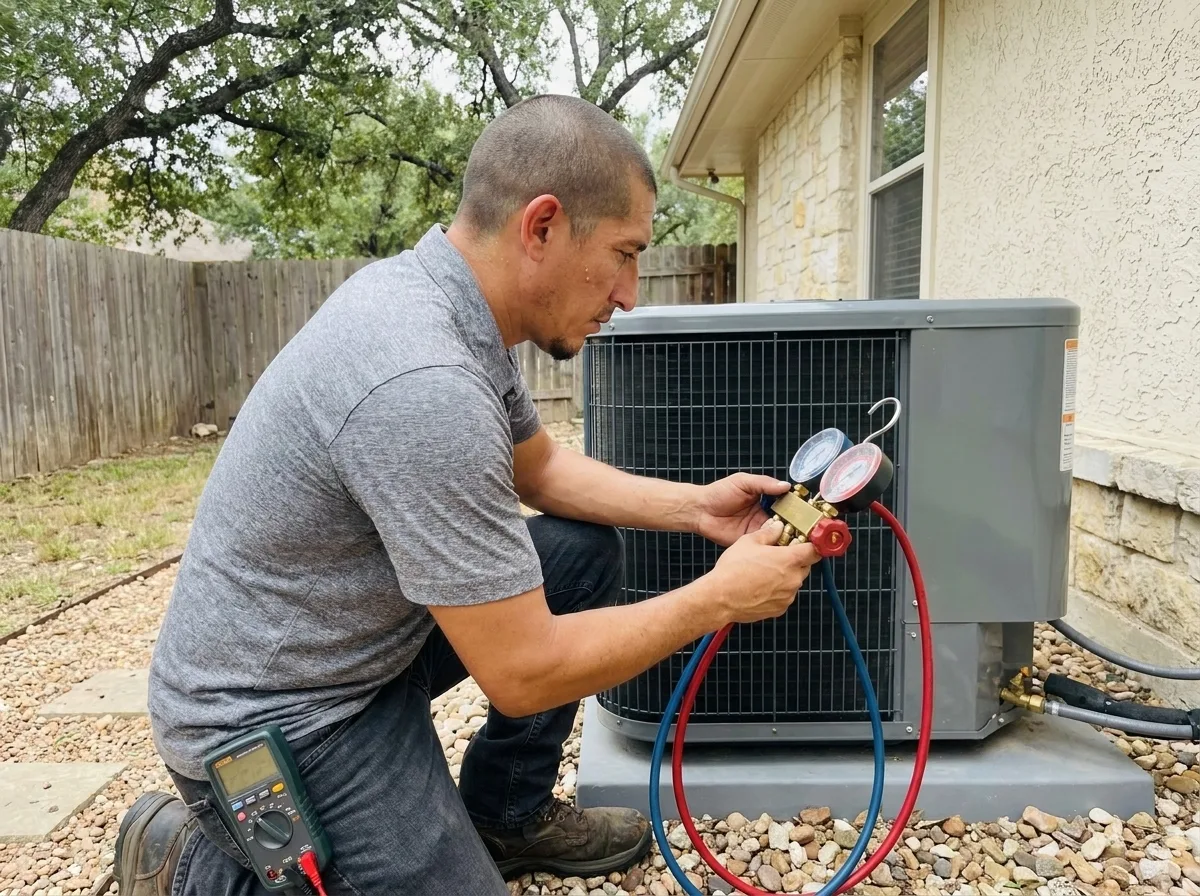
For any work involving the refrigerant circuit, make sure the technicians handling the equipment have the appropriate EPA Section 608 certification. EPA requires certification for technicians who maintain, service, repair, or dispose of equipment that could release refrigerant.
Frequently Asked Questions
Is a heat pump a good choice for a San Antonio home?
It can be, particularly for homeowners replacing aging heating and cooling equipment at the same time. Because San Antonio’s cooling season is long and its winters are mild, one efficient system for both jobs often makes sense. The right choice still depends on your existing heating system, ductwork, proper sizing, comfort needs, and the complete installed cost.
Can a heat pump replace both my AC and furnace?
In many homes, yes. A heat pump cools in summer and reverses to provide heat in winter, so it can replace both a central AC and a furnace. If your gas furnace is still in good shape, a dual-fuel setup can pair it with a heat pump so the furnace handles only the coldest days.
Will a heat pump work during a San Antonio cold front?
Yes. A properly sized heat pump keeps producing heat well below freezing, although its capacity drops as outdoor temperatures fall. During a hard freeze, backup heat strips or a gas furnace in a dual-fuel setup can help. Ask for the manufacturer’s heating-capacity data at low temperatures instead of relying on a general performance claim.
Can I use my existing ductwork?
Often, yes. Before a new heat pump is connected, the ducts should be checked for sizing, leaks, damaged insulation, crushed sections, and return airflow. Existing duct problems can undercut otherwise good equipment, so fixing them during the installation usually costs less than living with the same comfort complaints afterward.
Can I install a heat pump without ductwork?
Yes. Ductless mini-split heat pumps heat and cool without central ductwork, using one or more indoor units connected to an outdoor unit. They work well for room additions, converted garages, older homes with limited duct space, and individual rooms that have always been hard to keep comfortable.
Will a heat pump lower my energy bills?
It can, but there is no guaranteed savings amount for every home. The biggest savings usually come from replacing electric resistance heat or a very old, inefficient system. Your results depend on the new system’s efficiency ratings, electricity rates, home insulation, ductwork condition, proper sizing, and how much the system runs.
Why Choose Alamo Comfort Heating & Air Conditioning for Heat Pump Installation in San Antonio?
The right heat pump installation starts with understanding your home, not with picking the highest efficiency model. At Alamo Comfort Heating & Air Conditioning, we size every system to the house before we recommend anything, check the ductwork it will depend on, and install both ducted heat pumps and ductless mini-splits for homes across San Antonio and Bexar County.
Our technicians do not work on commission, so nobody here earns more for steering you toward a bigger or pricier system. Every installation we complete is backed by a labor warranty of up to 10 years. We are EPA 608 certified, and our Texas HVAC contractor license is TACLB 110532E.
If your AC or furnace is getting older, we will compare a heat pump with a traditional replacement side by side, with written pricing for each, so you can choose what truly fits your home. Call (210) 202-0255 to schedule your free in-home estimate.