
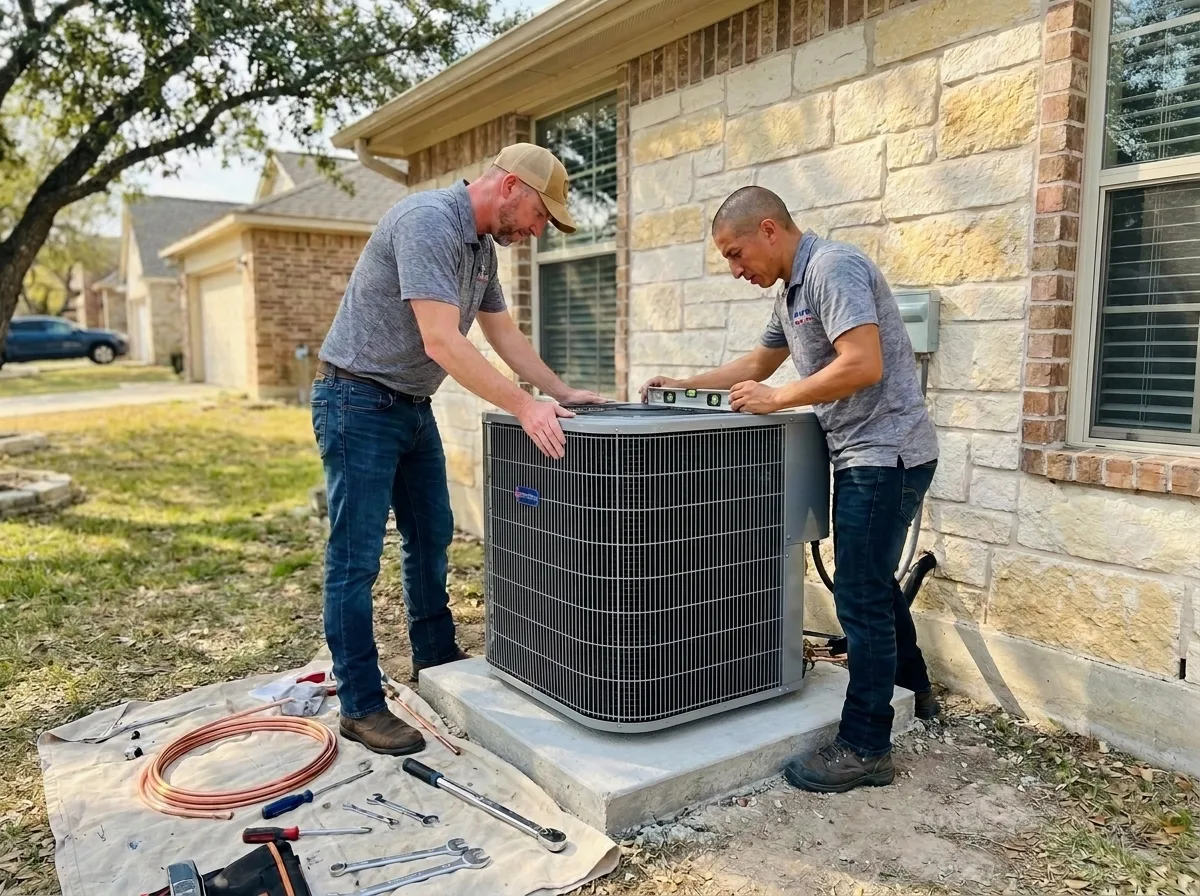
When an air conditioner quits during a San Antonio summer, homeowners often face a hard question: pay for another repair, or invest in a replacement? The answer is rarely as simple as comparing today’s repair bill against the cost of a new system. Age, repair history, efficiency, refrigerant type, and long-term operating costs all matter.
In South Texas, where air conditioners frequently run 10 to 14 hours a day in peak summer, an aging system sees far more wear than equipment in cooler climates. Knowing when a repair still makes sense, and when a new AC installation in San Antonio is the better value, can keep you from spending thousands on the wrong decision.
When does repairing your AC still make sense?
Not every repair means it’s time for a new air conditioner. Many systems keep cooling reliably for years after routine repairs, especially when they’ve been maintained and the failure is a relatively inexpensive component.
Repairs are often the smarter investment when the system still cools efficiently, hasn’t broken down repeatedly, and the fix addresses an isolated issue rather than ongoing deterioration.
Repairs are often worth considering when
| Situation | Repair usually makes sense |
|---|---|
| System is under 10 years old | ✓ |
| First major repair | ✓ |
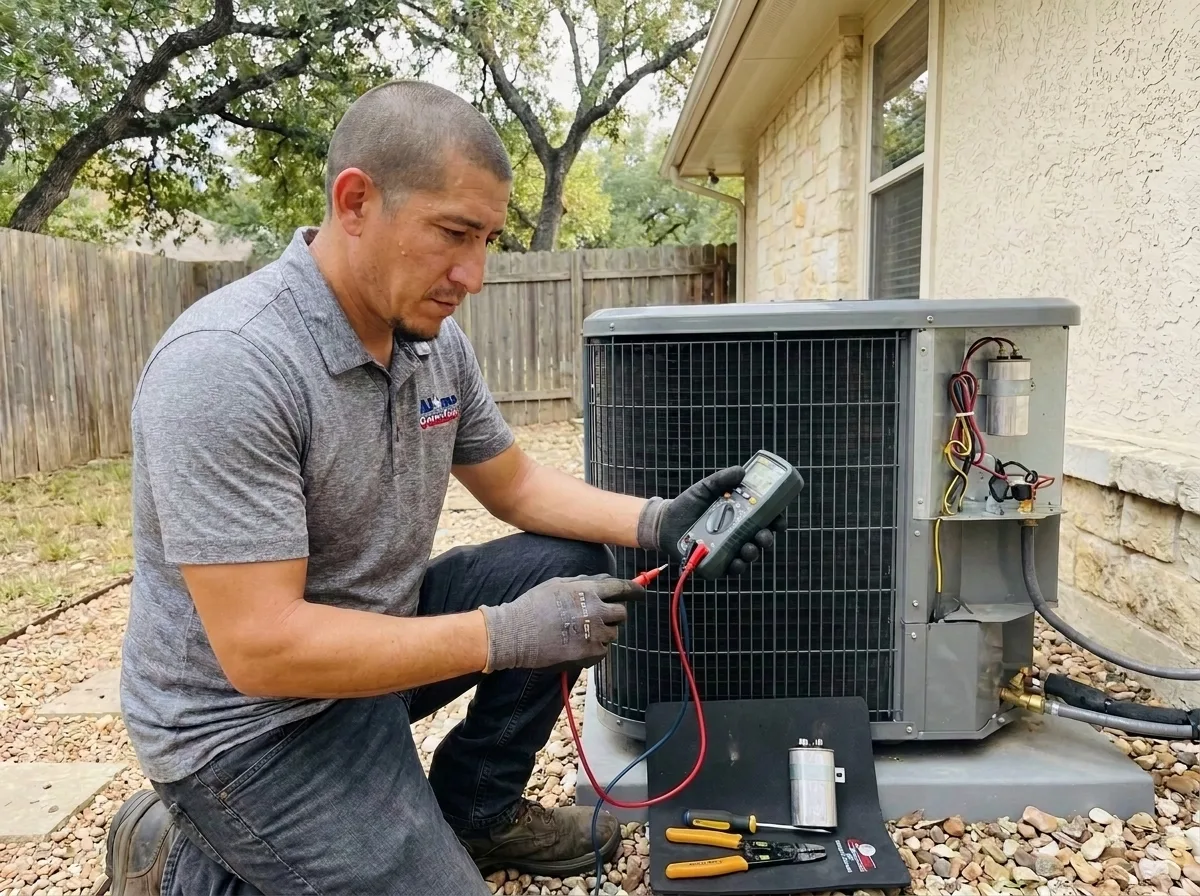
| Capacitor, contactor, or thermostat failure | ✓ |
| Cooling performance has otherwise been reliable | ✓ |
| Repair cost is a small share of replacement cost | ✓ |
Replacing a worn electrical part on an eight-year-old system is very different from replacing a compressor on equipment that’s already needed several expensive repairs. Looking at the system’s overall condition puts today’s estimate in perspective.
How does the age of your AC affect the decision?
Age alone should never decide whether you repair or replace, but it provides valuable context. As systems age, efficiency declines, major components reach the end of their service life, and parts get harder or more expensive to find.
Most residential air conditioners last 12 to 15 years with regular maintenance. In San Antonio’s demanding climate, where systems work much harder than in many parts of the country, recurring repairs become more common after the ten-year mark.
Less than 8 years old
If the system has been maintained and still cools well, repairing an isolated component failure is usually the most economical option.
8 to 12 years old
This is the stage to start comparing repair costs, energy efficiency, and overall condition before approving larger repairs.
More than 12 years old
Major repairs deserve careful thought, because other components may also be nearing the end of their service life.
15 years and older
When repair costs keep climbing, replacing the system with a modern, efficient unit often delivers better reliability, lower operating costs, and improved comfort.
How much should you spend before replacing your AC?
One useful guideline is the relationship between repair cost and the remaining value of the system. A modest repair on newer equipment usually makes sense, but sinking thousands into an aging air conditioner gets harder to justify.
Some homeowners use the $5,000 rule: multiply the age of the air conditioner by the estimated repair cost. If the result is greater than 5,000, replacement may deserve serious consideration. It’s not a strict rule, but it’s a practical way to weigh today’s repair against the equipment’s expected remaining life.
| System age | Repair cost | Result | Worth considering |
|---|---|---|---|
| 6 years | $500 | 3,000 | Repair usually makes sense |
| 9 years | $650 | 5,850 | Compare repair and replacement |
| 12 years | $700 | 8,400 | Replacement may provide better value |
| 15 years | $900 | 13,500 | Replacement often the smarter investment |
Treat the $5,000 rule as a guide rather than the final answer. A professional evaluation that weighs condition, efficiency, refrigerant type, and repair history gives a much clearer picture of which option delivers the best long-term value.
How much can a new AC save on energy bills?

Repair cost is only one part of the decision. Monthly operating cost also deserves attention, especially if your current air conditioner is over a decade old. As equipment ages, it often runs longer to hold the same temperature, particularly through San Antonio’s extended cooling season.
Modern high-efficiency systems use less electricity while delivering more consistent cooling and better humidity control. Depending on the age and efficiency of the old equipment, many homeowners notice meaningful savings on summer bills after a new installation.
Signs your current system may be costing too much to operate
Summer bills keep increasing
If cooling costs rise each year despite similar settings and usage, declining efficiency may be adding to your monthly expense.
The AC runs most of the afternoon
A system that struggles to satisfy the thermostat on warm days often uses more electricity than necessary while wearing on major components.
Indoor humidity feels uncomfortable
Older equipment may cool the air without removing enough moisture, leaving the home sticky even when the thermostat reads the right temperature.
Certain rooms never stay comfortable
Uneven temperatures can point to declining performance or airflow issues that may not be worth correcting on an aging unit.
How can a professional evaluation help you decide?
Choosing between repair and replacement should never be guesswork. A thorough evaluation gives a complete picture of the system’s condition, so you understand not only what failed today but what may need attention next.
Instead of recommending the most expensive option, a qualified contractor should explain the equipment’s condition, expected repair life, operating efficiency, and whether more repairs are likely over the next few years.
| Inspection | Why it matters |
|---|---|
| Overall equipment condition | Identifies wear on major components |
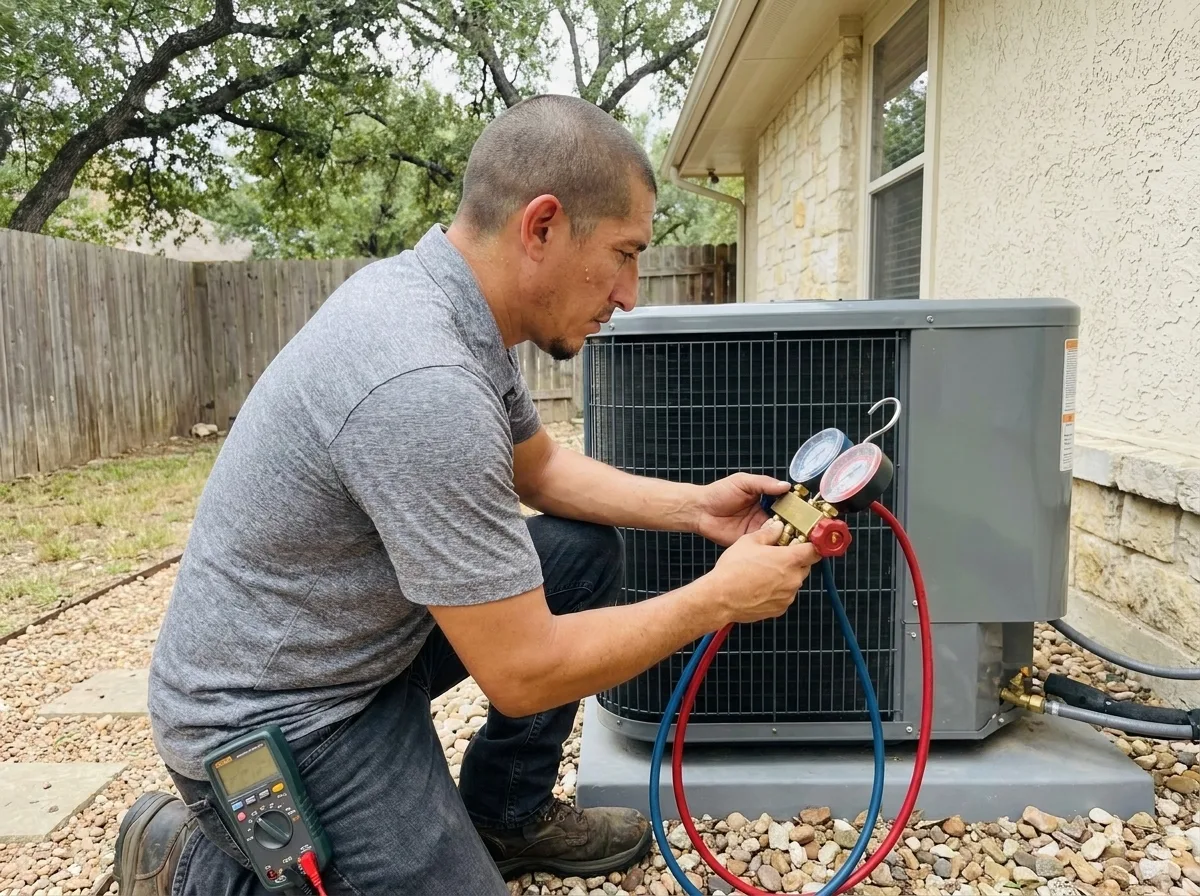
| Refrigerant and cooling performance | Confirms the system is operating efficiently |
| Airflow and duct inspection | Reveals issues affecting comfort and energy use |
| Repair history review | Helps predict future reliability |
| Repair vs. replacement comparison | Supports a more informed financial decision |
How Alamo Comfort helps you decide
Deciding whether to repair or replace is a significant investment, and every home is different. The right call depends on age, repair history, efficiency, and long-term operating cost, not just today’s estimate.
At Alamo Comfort Heating & Air Conditioning, our technicians perform a complete evaluation before making a recommendation. From complex AC repairs to planning a new AC installation in San Antonio, every recommendation is based on the condition of your equipment and your long-term comfort, with no pressure.

Join the conversation