Your AC is still cooling the house, so a higher electric bill can be confusing. If your usage has suddenly climbed, it does not automatically mean the compressor is failing or that you need a new system. A dirty filter, restricted airflow, outdoor coil buildup, thermostat settings, ductwork issues, or longer-than-normal runtimes can all make your AC work harder.
In San Antonio, hotter weather can naturally push cooling costs higher, while your bill may also reflect changes in electricity usage and seasonal pricing factors. Before spending money on a repair or replacement, compare your recent kWh usage with the same period last year and look for changes in how long your AC is running. This guide walks you through what to check first, which problems you can safely spot yourself, when a repair may be necessary, and when higher energy use deserves a professional diagnosis.
Is Your AC Actually Using More Electricity?

Start with the bill itself, not the outdoor unit. Look at your current electricity usage in kWh, compare it with the same month last year, and check whether your thermostat settings and household habits changed. A larger bill does not automatically mean your AC developed a mechanical problem.
If your kWh usage has increased substantially while your comfort and thermostat settings have stayed about the same, the AC becomes a more likely place to investigate. If your kWh usage is similar but the total bill increased, look at the utility’s current rates and charges before scheduling an HVAC repair.
Before blaming your AC, compare:
- Current kWh usage: Did your home actually consume more electricity?
- Previous summer usage: Compare similar months rather than winter bills.
- Thermostat settings: Check whether the system is maintaining a lower setting.
- AC runtime: Notice whether the system runs substantially longer than before.
- Other electrical loads: Pool pumps, appliances, or added equipment can affect usage.
If you are a CPS Energy customer, keep in mind that summer bills from June through September include a Peak Capacity Charge on every kWh used above 600 kWh. A hot month can raise the bill faster than usage alone suggests, so checking the bill’s actual usage and charges gives you a better starting point.
Could a Dirty Filter or Blocked Vents Be the Cause?
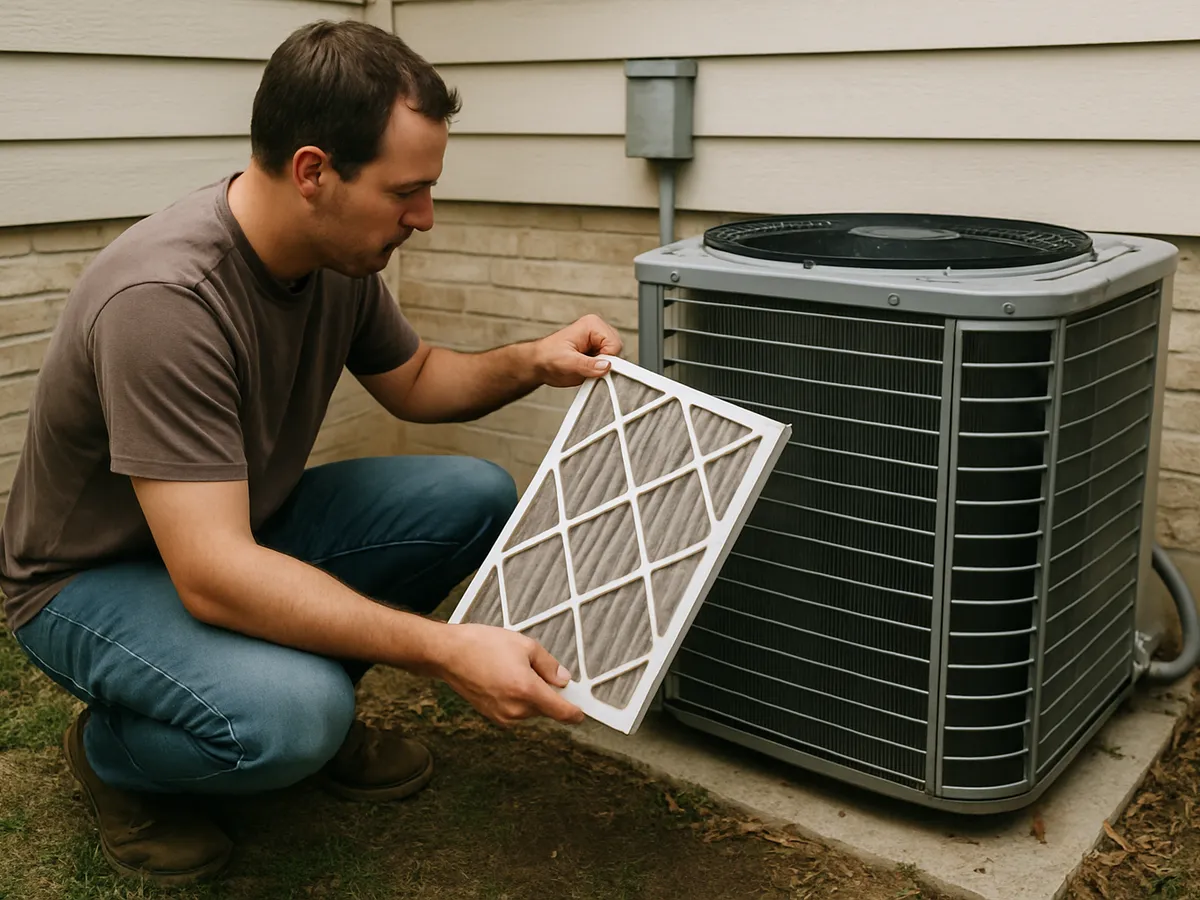
The air filter is the first physical AC check because it is inexpensive, accessible, and something you can safely inspect yourself. A heavily loaded filter restricts airflow, making the system work harder to move conditioned air. Check the filter monthly during heavy-use months and replace it when it looks dirty, and at least every three months, more often if you have pets or recent renovation dust.
Then look at the supply and return vents. Make sure furniture, rugs, curtains, or other objects are not blocking them, and pay attention to whether airflow feels noticeably weaker than it did previously. One room becoming harder to cool can be a useful clue, especially when the thermostat still reaches its setting.
Check these before scheduling a repair:
- Air filter: Replace it if it is visibly dirty or heavily loaded.
- Supply vents: Make sure furniture or rugs are not blocking airflow.
- Return grille: Keep the return opening clear so the system can breathe.
- Thermostat fan setting: Confirm the fan is not accidentally set to run continuously.
- Room-to-room airflow: Notice whether certain areas have become noticeably weaker.
If a clean filter and clear vents do not change the problem, move to the next check rather than repeatedly replacing filters. Persistent weak airflow can point toward a dirty coil, blower issue, duct restriction, or another condition that requires a closer inspection.
Is the Outdoor Unit Struggling to Release Heat?
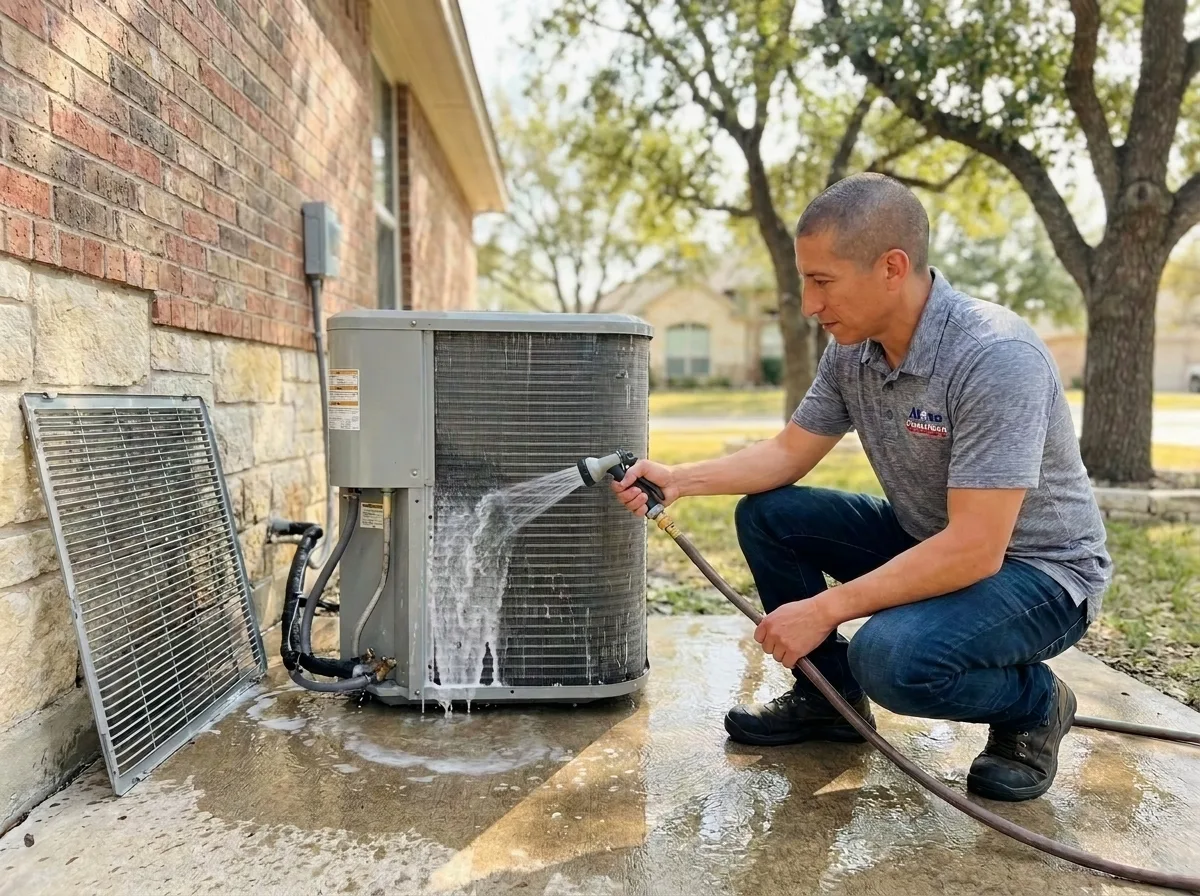
Next, look at the outdoor condenser. The unit needs to move heat from inside your home to the outdoor air, and a coil covered with dirt, grass clippings, leaves, or other debris can make that heat transfer harder. ENERGY STAR specifically recommends cleaning both evaporator and condenser coils because dirty coils can make an AC run longer and increase energy costs.
You can safely look around the unit without opening the electrical panel. Keep plants, leaves, grass, and other debris away from the cabinet, and make sure nothing is blocking the airflow around the condenser. If the coil itself is heavily dirty or damaged, leave the deeper cleaning to a technician rather than bending the fins or spraying electrical components.
Look for these visible warning signs:
| What you notice | What it may point to |
|---|---|
| Heavy dirt covering the outdoor coil | Reduced heat transfer |
| Grass or leaves packed around the cabinet | Restricted outdoor airflow |
| Unit running much longer than before | Reduced cooling efficiency |
| Ice on refrigerant lines | Airflow or refrigerant problem; turn cooling off and call for service |
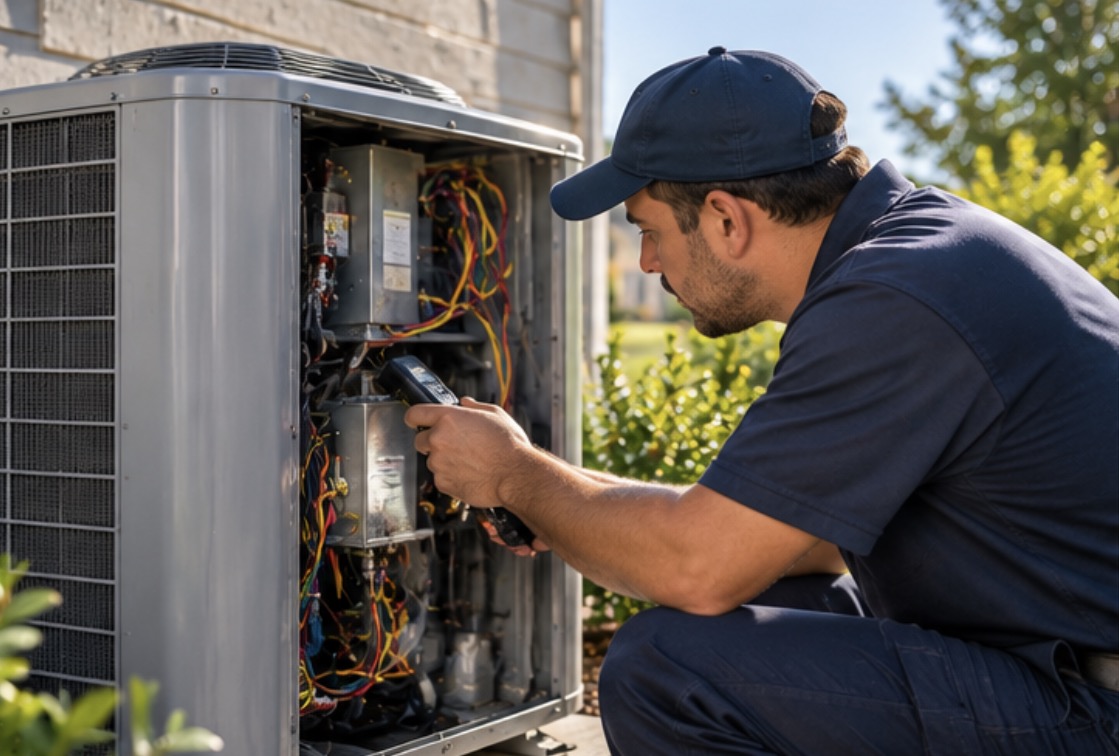
| Outdoor fan behaving unusually | Possible motor or electrical issue |
A dirty condenser does not automatically mean the system needs a major repair. Sometimes the solution is simply cleaning the coil and correcting the condition that allowed it to become restricted. If the unit continues running excessively after the obvious issues are addressed, that is when a professional diagnosis becomes more useful.
Is Your AC Running Longer or Short Cycling?

If the filter and outdoor unit look normal, pay attention to how the AC is actually running. A system that runs longer on an unusually hot afternoon is not necessarily malfunctioning. The more useful warning is a change from the system’s normal pattern, such as significantly longer cycles, frequent starts and stops, or difficulty reaching the usual setting.
Short cycling deserves particular attention. An AC that repeatedly starts and stops before completing a normal cooling cycle can have several possible causes, including equipment sizing, airflow problems, controls, or refrigerant-related issues. Checking that the system starts, runs, and shuts off properly is a standard part of routine AC maintenance.
Pay attention to the pattern:
- Longer cycles: The system may be working harder to remove heat.
- Frequent starts: Short cycling can point to a control or equipment problem.
- Never reaching the setting: Cooling capacity may be affected.
- Normal cycles but higher usage: Weather or another household load may explain it.
- Different behavior from last summer: The change itself is worth investigating.
Don’t diagnose the failed component from runtime alone. The same symptom can come from several different causes, which is why a technician should measure the system before recommending an expensive repair.
Are Leaky Ducts or a Hot Attic Wasting Cooled Air?
If the AC is running normally but certain rooms are taking longer to cool, look at the air distribution side of the system. Duct leaks, disconnected sections, crushed flexible duct, or poor airflow can allow conditioned air to escape before it reaches the rooms you are trying to cool. Leaky ducts are a common hidden reason an AC runs longer than it should.
Some San Antonio homes have ductwork in attics that become extremely hot during summer. That does not automatically mean your ducts are defective, but it makes the condition of the duct system worth considering when your AC runs longer without delivering the same comfort. A duct problem can look like an equipment problem because the thermostat sees one temperature while individual rooms tell a different story.
Check for clues such as:
- One room always feels warmer: The problem may be localized to airflow or ductwork.
- Weak airflow at several vents: The restriction may be closer to the air handler.
- Visible disconnected ductwork: Air can escape before reaching the living space.
- Crushed flexible duct: Restricted airflow can make cooling less effective.
- Longer runtime after duct changes: Recent attic or remodeling work may have affected distribution.
Do not crawl around an attic trying to repair ductwork or electrical components yourself. If accessible ductwork looks disconnected or damaged, take a photo and show it to the technician. A professional can determine whether the duct condition is contributing to the higher runtime.
The home itself matters too. Thin attic insulation, air leaks around doors and windows, and strong afternoon sun on west-facing windows all add heat your AC has to remove. Duct leak detection and an energy audit can show where cooled air, and money, is escaping.
Could Low Refrigerant Be Raising Your Bill?
Refrigerant should not be the first thing you blame when the electric bill rises. A dirty filter, restricted airflow, dirty coil, duct problem, or control issue can produce similar symptoms. If the basic checks are normal and the system still runs longer than it should, refrigerant becomes one of the conditions a technician may investigate.
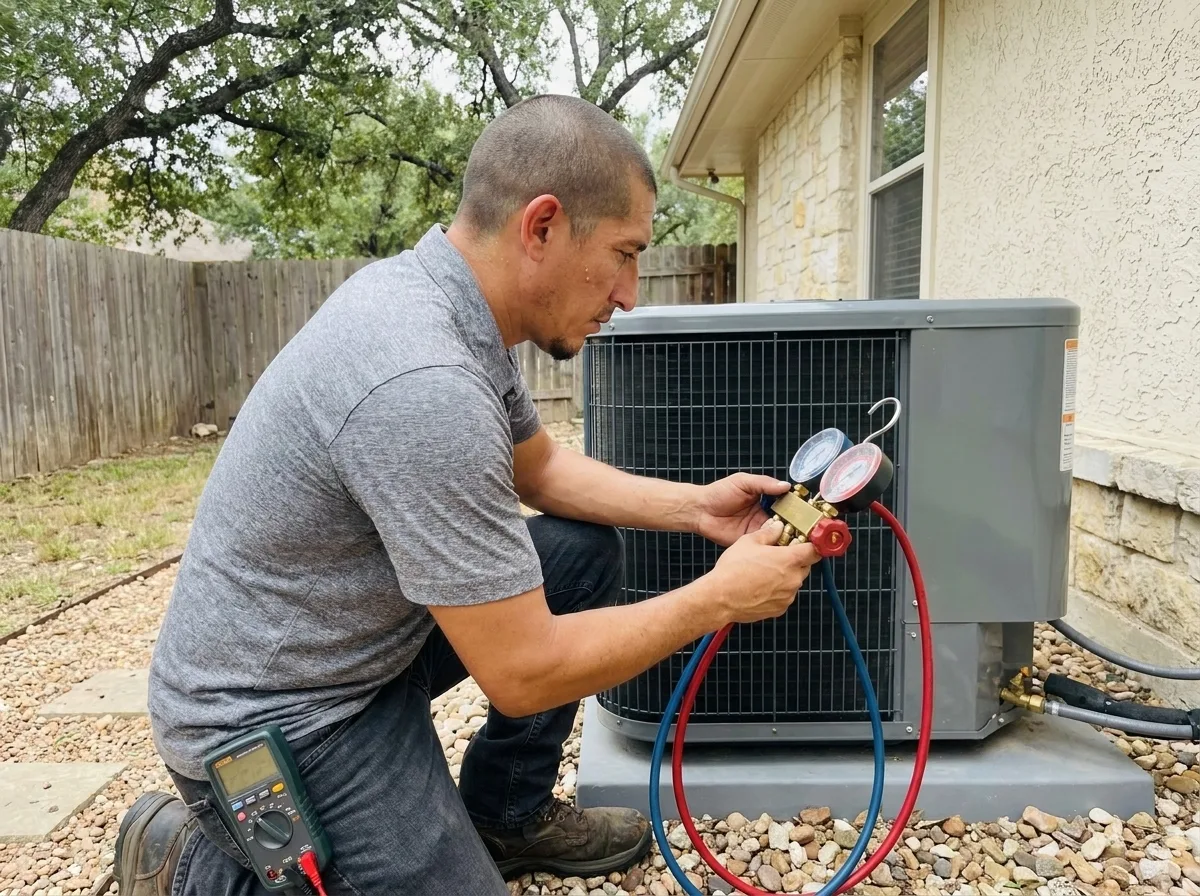
A low refrigerant charge generally indicates that refrigerant has escaped from the system rather than simply being “used up.” Proper diagnosis requires equipment and refrigerant-handling procedures that are not homeowner work. EPA Section 608 requires technicians who service equipment that could release regulated refrigerants to hold the appropriate certification.
Signs that justify a professional refrigerant check include:
- Longer cooling cycles: The system takes longer to satisfy the thermostat.
- Reduced cooling: Supply air may not feel as cool as before.
- Ice formation: Frost on refrigerant lines or coils can indicate several problems.
- Repeated refrigerant service: A recurring low charge deserves leak investigation.
- No obvious airflow problem: A technician can test refrigerant conditions after airflow is addressed.
Do not approve a simple refrigerant “top-off” without asking what caused the charge to become low. If there is a leak, adding refrigerant without addressing the underlying problem may only postpone the same issue.
How Much Do Common AC Repairs Cost in San Antonio?
Once the basic checks are done, the next step should be a proper diagnosis rather than guessing which part needs to be replaced. A technician should identify why the system is running longer than usual and explain whether the recommended repair will correct the underlying problem or only address one symptom.
For budgeting, common AC repairs in San Antonio can range from roughly $150 to $1,500+, depending on the component, labor, accessibility, and whether additional diagnostic work is needed. Treat online price ranges as planning numbers, not a final quote. A reputable technician should explain what failed, how it was confirmed, and what you are paying to fix before starting the work.
| Possible repair | San Antonio planning range |
|---|---|
| Diagnostic inspection | $75–$150 |
| Capacitor replacement | $150–$350 |
| Contactor replacement | $175–$400 |
| Condensate drain cleaning | $125–$300 |
| Blower motor repair/replacement | $450–$1,000+ |
| Refrigerant leak repair and recharge | $400–$1,500+ |
| Evaporator coil replacement | $1,200–$2,800+ |
| Compressor replacement | $2,000–$4,000 |
The important question is not whether a repair costs $200 or $2,000 in isolation. It is whether the repair makes sense for the age, condition, efficiency, and repair history of the system. A six-year-old AC with one failed capacitor is a very different financial decision from a 15-year-old system facing a compressor or coil replacement.
If a symptom keeps returning after a repair, ask the technician to explain what failed, why it failed, and what was checked around it. Repeated refrigerant loss calls for leak investigation, and recurring airflow problems may require looking beyond the filter at the blower, coil, or duct system. Share the repair history too, since knowing what was fixed before and when helps pinpoint the real cause.
When Is AC Replacement Worth Considering?
Do not jump from a higher electric bill directly to replacement. A rising bill can come from weather, household electricity use, utility charges, maintenance problems, or an actual equipment fault. If the AC still cools, identifying the reason for the increased energy use gives you much better information before spending thousands on new equipment.
AC replacement becomes a more reasonable conversation when the system is older, repairs are becoming frequent, efficiency has declined, or a major component has failed. Even then, have the system evaluated first rather than assuming every problem requires immediate replacement.
Before approving replacement, ask:
- What specifically is causing the higher energy use?
- Can the problem be repaired without replacing the system?
- How old is the existing equipment?
- What repairs have been needed recently?
- What would the repair cost compared with replacement?
- Would a new system meaningfully improve efficiency and comfort?
That information lets you compare the repair and replacement options based on the condition of the actual system instead of making the decision from one high electric bill.
Frequently Asked Questions
Can my AC raise my electric bill even if it still cools?
Yes. A system can continue cooling while becoming less efficient because of restricted airflow, dirty coils, duct problems, refrigerant issues, or other conditions. It is also important to compare actual kWh usage because hotter weather and other household loads can increase the bill without an AC failure.
What should I check first if my AC runs all day?
Start with the electricity usage, thermostat settings, air filter, supply and return vents, and visible conditions around the outdoor unit. If those checks are normal and the system still runs unusually long, schedule a professional diagnosis rather than guessing at a refrigerant or compressor problem.
How much does an AC diagnostic cost in San Antonio?
Diagnostic fees in San Antonio commonly run about $75–$150, depending on the company and whether the system is residential or commercial. Many companies credit the fee toward the repair if you approve the work, so ask about that when you book. The fee covers testing the system to find the actual cause before any repair is quoted.
Should I add refrigerant if my AC is low?
Have the system diagnosed first. A low refrigerant charge generally indicates that refrigerant has escaped, so the technician should determine whether there is a leak and whether repair is appropriate. Refrigerant service must be performed by appropriately certified technicians under EPA Section 608 requirements.
When should I stop repairing an older AC?
Consider the system’s age, repair history, efficiency, current condition, and the cost of the proposed repair. A single inexpensive component failure does not automatically justify replacement, while repeated major repairs on an aging system may make a replacement comparison worthwhile.
Why Choose Alamo Comfort Heating & Air Conditioning for AC Repair in San Antonio?
When your electric bill climbs but your AC still seems to be doing its job, the first step is finding out what changed. At Alamo Comfort Heating & Air Conditioning, we take a repair-first approach. We diagnose the system, show you what we find, and give you the repair price before any work begins, so you can make a decision based on the actual condition of your AC.
Our residential diagnostic is a flat $119, and it is credited toward the repair when you move forward. Our technicians do not work on commission, so nobody here earns more for recommending a bigger repair or a new system. As a family-owned San Antonio HVAC company serving the area since 2014, we handle AC repair in San Antonio for homes across Bexar County. Our technicians are EPA 608 certified, and our Texas HVAC contractor license is TACLB 110532E.
To keep small efficiency problems from turning into expensive repairs, our maintenance plans include spring and fall tune-ups and priority scheduling.
If your system is running longer than usual or your electric bill keeps climbing, call (210) 202-0255 and we will find out why.