You closed on a house with ductless mini-splits mounted on the walls, and you have no idea how old they are, whether anyone ever maintained them, or if the warranty still means anything. The previous owner left no paperwork. The first hint of trouble could be a head that quits cooling in July, or a repair bill nobody warned you about.
In the first year, check five things on inherited mini-splits: the age of each unit from its serial number, whether the manufacturer warranty transferred or can still be registered, the condition of the filters and condensate drain line, the outdoor line-set insulation for sun damage, and which indoor head serves which room. None of these need special tools to start, and catching a problem early is the difference between a cleaning and a compressor. Mini-splits are a common add-on in older north-side homes in Alamo Heights and Terrell Hills, where adding ductwork to a finished house is hard, so Alamo Comfort Heating & Air Conditioning walks through each check below and where your part stops and a technician’s starts.
How Old Are Your Inherited Mini-Splits, and Why Does It Matter?
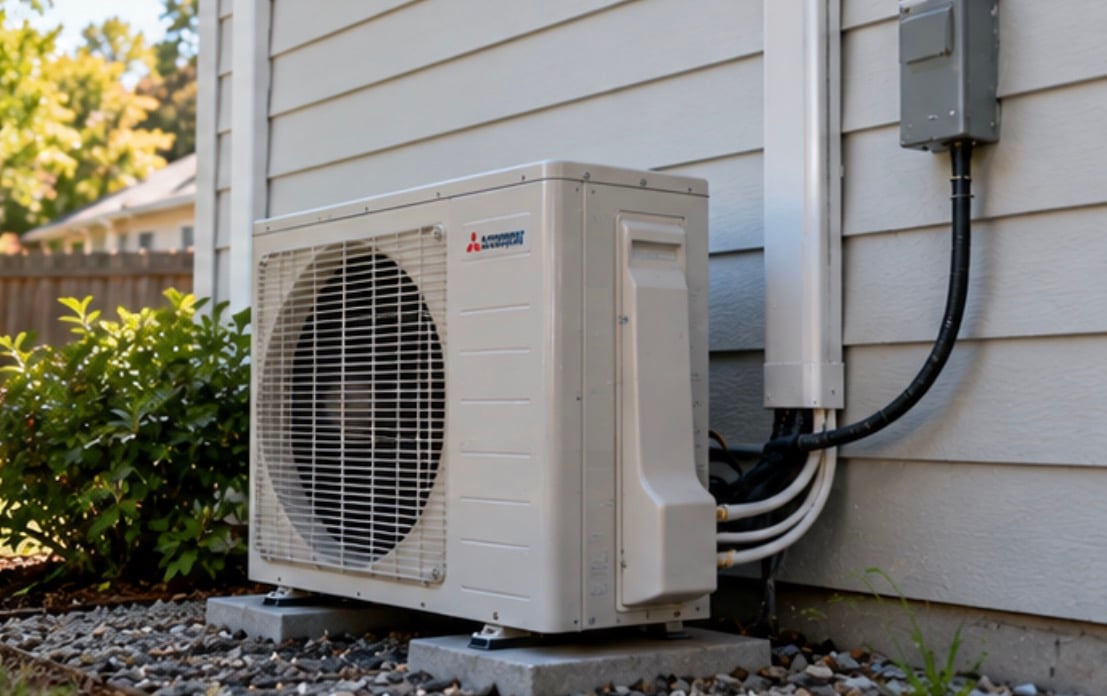
Start at the outdoor unit’s data plate and find the serial number. Most manufacturers encode the manufacture date in it, usually the week and year, sometimes buried in the first few characters. That date is the single fact that frames every other decision, because a well-maintained ductless system typically lasts 12 to 15 years or more before efficiency and repair frequency start arguing for replacement.
The serial number also hints at what refrigerant is inside. R-410A became the standard mini-split refrigerant after R-22 was phased out of new equipment in 2010, and it is still readily serviced. Units made from 2025 on use newer refrigerants such as R-32 or R-454B, so a recently installed system may hold one of those instead. A system from before 2010 may hold R-22, which is scarce and costly to top off.
Before anyone approves a replacement on an inherited unit, have the age pulled from the serial number and the refrigerant confirmed. A repairable R-410A system can look obsolete to an eye that never checked, and that mistake costs thousands. Knowing the age tells you how hard to look at everything that follows.
Did the Warranty Transfer to You, or Did You Lose It?
Here is where many inherited systems quietly lose protection. Manufacturers often offer a parts warranty of 5 to 10 years, but they require the original owner to register the equipment within a set window after installation. If the previous owner never registered, or the registration does not transfer to a new homeowner, you may be holding a far shorter standard coverage with no paper trail.
Parts and labor are two different things, and the gap matters when something fails. The manufacturer may cover the compressor itself while you pay every hour of labor to pull and replace it. That split is worth understanding before a failure forces the question, and the difference between labor and manufacturer warranty is often where inherited owners get surprised.
| What you may have | How long it typically lasts | Why it may not cover you |
|---|---|---|
| Parts warranty | 5 to 10 years from install | Often void without registration inside the original window |
| Labor warranty | Short, if any | Generally tied to the installer, rarely transfers to a new owner |
| Unregistered default | Reduced term | The fallback when no registration exists |
Call the manufacturer with the serial number and ask two things: what term applies, and whether any of it transfers to you. The answer decides whether a year-one failure is an inconvenience or an uncovered bill, and it costs you nothing but a phone call to find out.
How Do You Check the Filters and Drain Line Yourself?
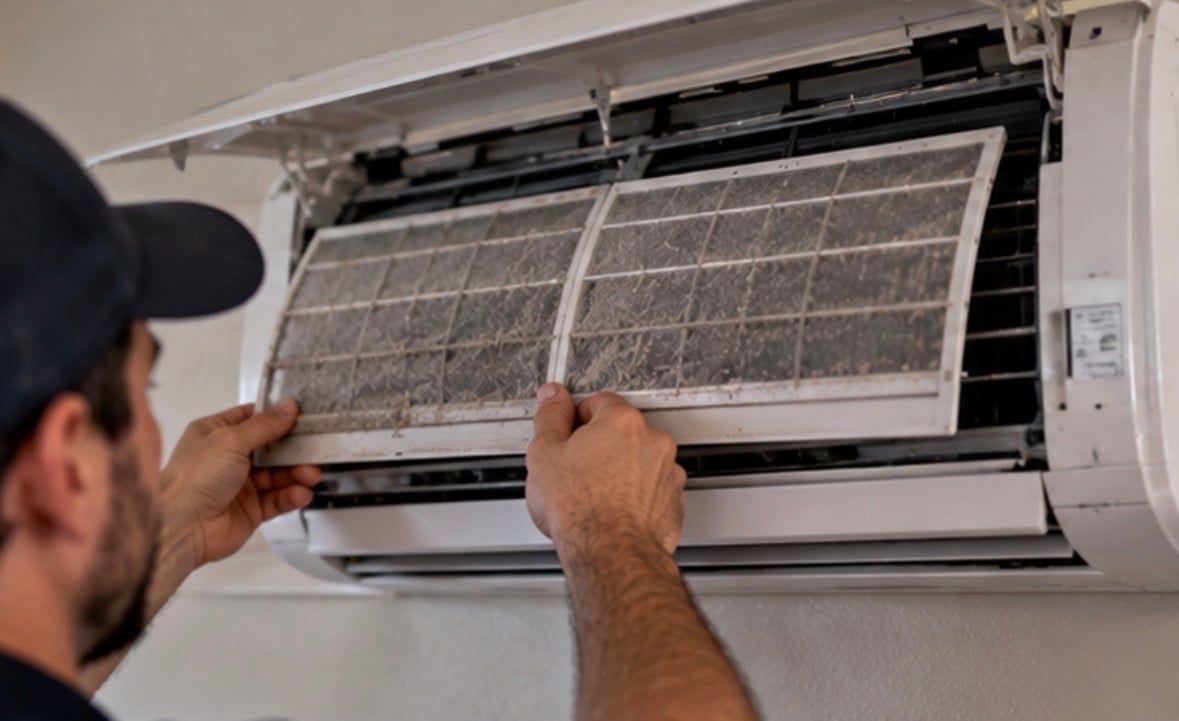
San Antonio runs cooling from roughly March into October, so inherited units see heavy continuous use almost immediately after you move in. These checks surface problems within weeks here, not seasons. Several are safe to do yourself.
Pull and Rinse the Indoor Filters
Open the front panel of each indoor head and slide out the washable filters by hand. Rinse them under water, let them dry fully, and slot them back. In heavy use they need this every 2 to 4 weeks, not once a season. A loaded filter raises run time and bills, and on an inherited head it may not have been touched in a year.
Flush or Inspect the Condensate Drain Line
Each head produces condensate that drains out through a line to the exterior. If that line clogs with algae or sludge, water backs up and many systems shut the head down to protect it. Check that water flows freely from the outdoor end of the line. A slow drip or standing water inside the head means the line needs flushing.
Check the Temperature Split at the Head
A healthy head usually shows roughly a 15 to 25 degree drop between the air it draws in and the air it blows out. Mini-splits change speed as they run, so the number moves, and one reading is a rough guide rather than a verdict. Run the head on cool for 15 minutes, then hold a thermometer at the intake and at the outlet. Say the intake reads 75°F and the outlet reads 55°F: that 20-degree drop is in range.
Look and Listen at the Outdoor Unit
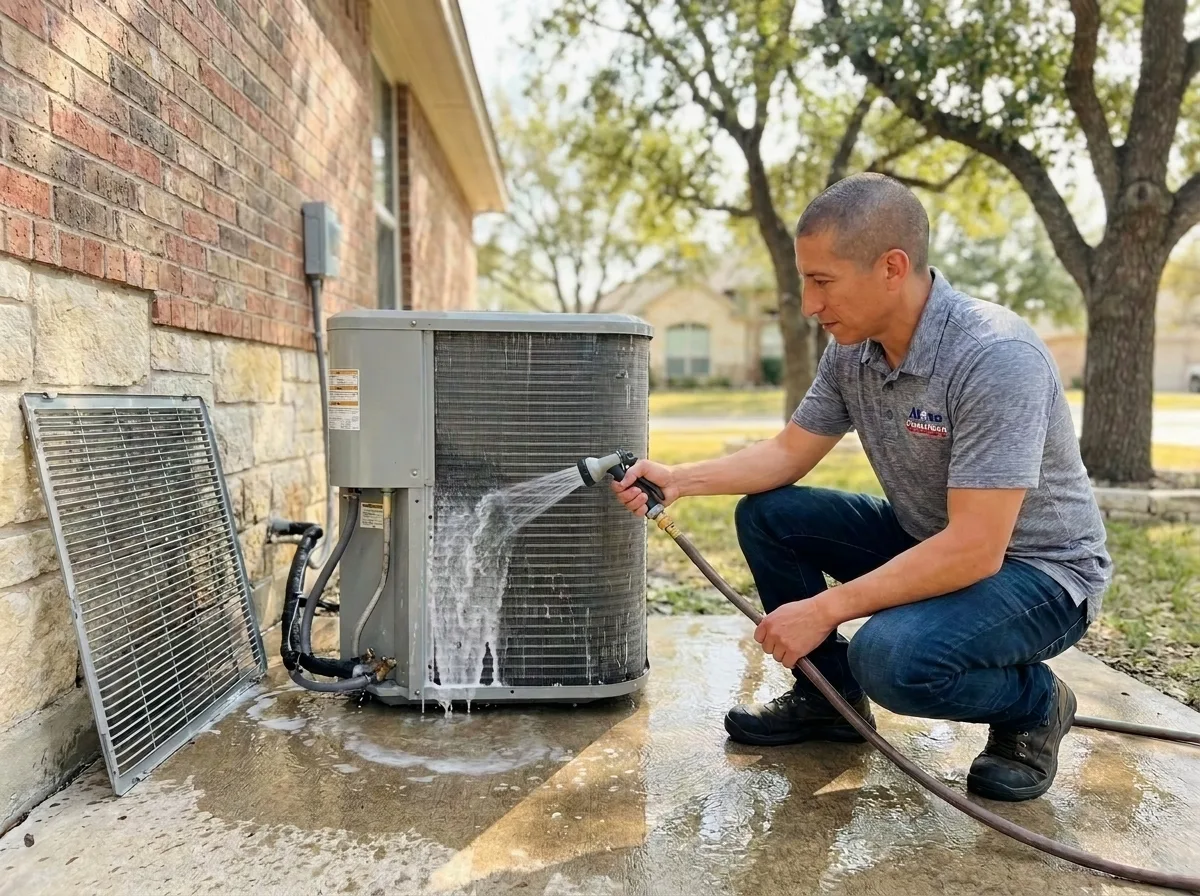
Walk out to the condenser and watch it run. The fan should spin smoothly and quietly, with no grinding, rattling or screeching. Clear leaves and debris off the coil and keep a couple of feet of space around it. A unit that cycles on and off rapidly or hums without starting points to an electrical fault that needs a technician.
Know Where Your Checks Stop and a Tech Begins
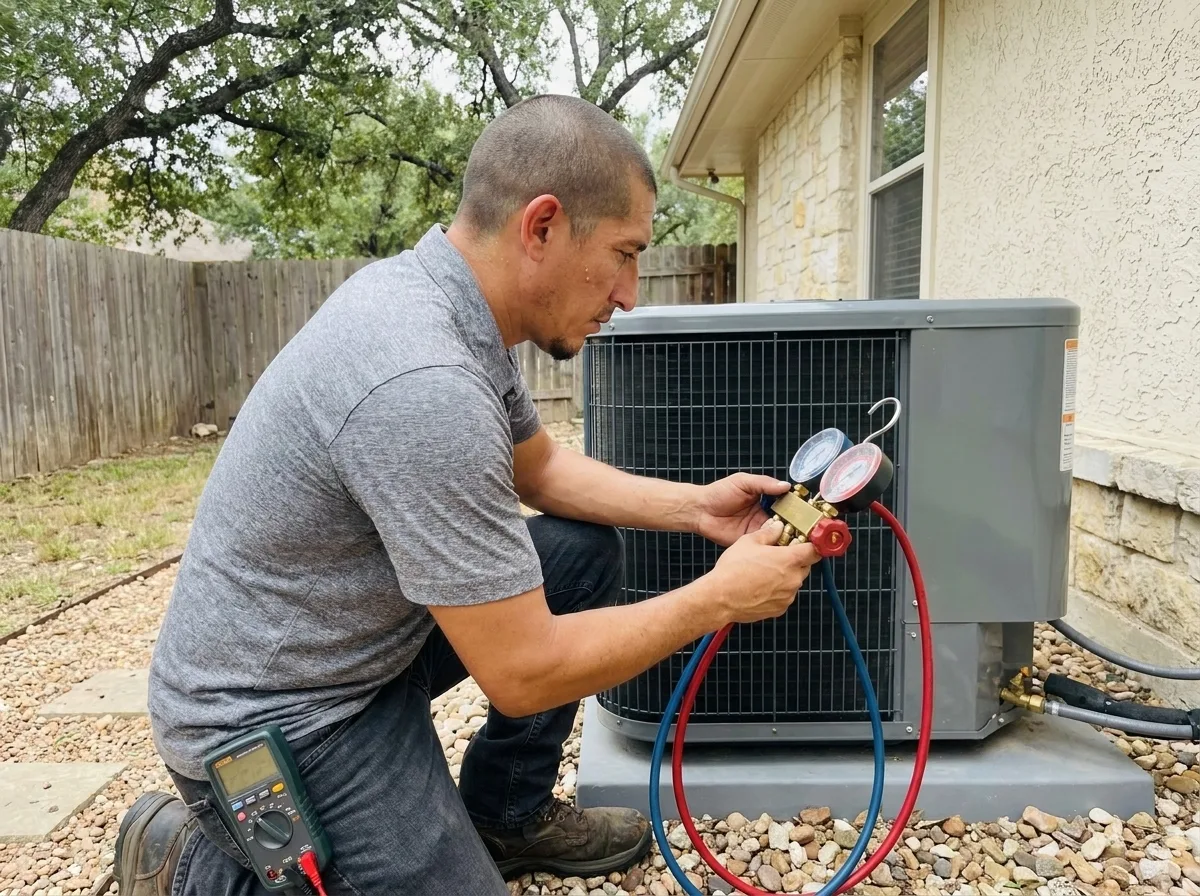
Filters, drain flow, temperature readings and a visual look are yours. Anything behind the sealed refrigerant circuit is not. Checking charge, repairing a leak or handling refrigerant legally requires EPA Section 608 certification and a Texas HVAC license. Ours is TACLB 110532E. If a split reads weak after a clean filter, that is when a ductless mini-split repair visit earns its keep.
Is the Outdoor Line Set Sun-Damaged?
The copper refrigerant lines running to your outdoor unit are wrapped in foam insulation, and strong South Texas UV rots that foam faster than in cooler regions. On an inherited system, it may already be cracked, crumbling or missing where the sun hits it hardest. That is a quiet efficiency drain most new owners never think to check.
When the insulation fails, the lines gain and lose heat they should not, so the system runs longer to hit the same setpoint and your summer bill creeps up with no obvious cause. Here is what to look for on the line set:
- Cracked or split foam: Surface cracks that expose the copper underneath to direct sun
- Chalky or crumbling insulation: Foam that flakes apart when you touch it has lost its seal
- Missing sections: Bare copper where the wrap has fully degraded away
- Faded, brittle outer tape: The protective tape peeling off the foam underneath
- Sagging or loose wrap: Insulation that has pulled away from the line and left gaps
Re-wrapping a sun-damaged line set is an inexpensive fix compared to the run time it quietly adds. Flag it on your first-year walkaround, because in this climate it is nearly always worth checking and nearly always overlooked.
Which Head Serves Which Room, and Why Map It Now?
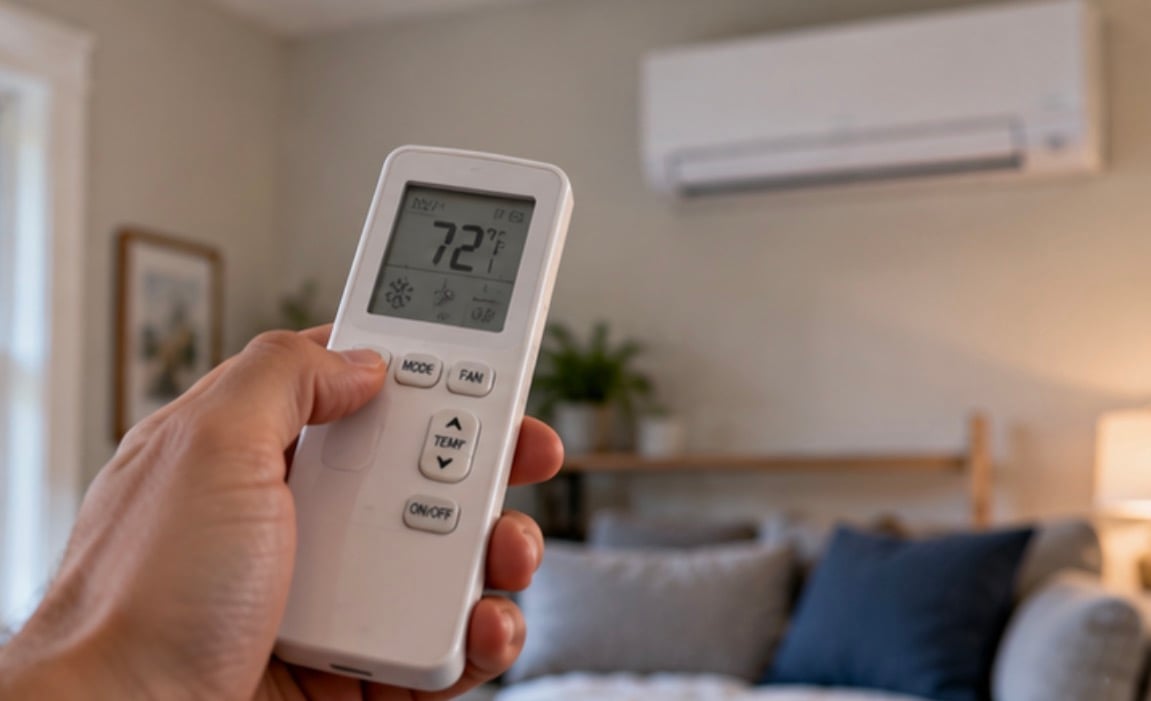
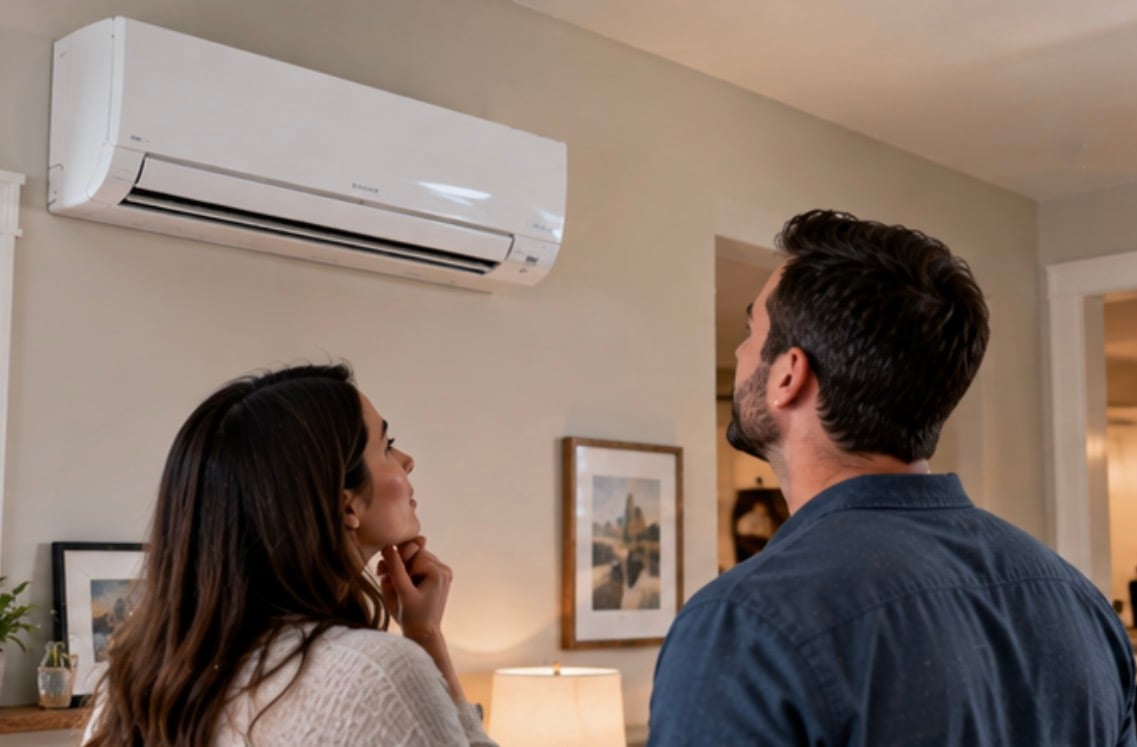
On a multi-zone system, several indoor heads run off one outdoor unit, and the remotes often look identical. Figuring out which remote and which head belong to which room in month one saves confusion later, especially when you need to describe a fault to a technician over the phone.
Walk the house with the remotes and work it out deliberately. A clear map tells you fast when a zone is underperforming:
- Label each remote: Match it to its head and mark the room it controls
- Run one zone at a time: Confirm which head responds to which remote
- Note the weak zone: A room that never cools may be undersized or have a failing head
- Check a dead zone: A head that will not start at all points to a fault, not a setting
- Record the brand: Read the model off each head so any service call starts informed
An unfamiliar brand name on the wall is no reason to worry, since most mini-splits share the same basic parts. Write down the model number from each head so the technician arrives knowing what to bring. If a zone reads weak once you have mapped it, a yearly check-up through a maintenance plan sorts a setting from a fault.
When Is an Inherited Mini-Split Worth Repairing Versus Replacing?
The decision is not age alone but age, refrigerant type and repair cost together. A system in the back half of its 12 to 15 year span, running R-410A with one affordable repair ahead, is usually worth keeping. The same age on R-22 facing a leak is a different math problem.
This is where the diagnosis matters. Our technicians are not paid on commission, and our owner, Rusty Hoermann, personally quotes every installation, so nobody here gains from writing off a repairable unit. Ask what failed, what it costs to fix, and how that compares against the life left.
If the numbers genuinely point to replacement, price a ductless mini-split installation rather than pour money into a dying system. But confirm age and refrigerant first, because a unit that looks tired on the wall may have years left in it.
Why Choose Alamo Comfort Heating & Air Conditioning for Mini-Split Service in San Antonio?
Alamo Comfort Heating & Air Conditioning is a family-owned company on Gulfdale in north San Antonio, serving neighborhoods like Alamo Heights, Terrell Hills and Castle Hills, with 4.9 stars on Google. Our team knows that inherited systems come with gaps, and that filling them in is the first job.
On a first-year visit, we fill in the history the previous owner didn’t leave: the age of each unit, the refrigerant, the condition of the drains and wiring, and how every zone performs. You get a written price before any work starts, so you can decide on repairs with the full picture in front of you.
If replacement does make sense, every system we install comes with up to 10 years of labor coverage, which an inherited unit almost never has. For the first-year check, our diagnostic is a flat $119 for homes and goes toward the repair if you go ahead. Call (210) 202-0255 to book.
Frequently Asked Questions
How do I find out how old my mini-split is if I have no paperwork?
Read the serial number on the outdoor unit’s data plate. Most manufacturers encode the manufacture date in it, often the week and year. If you cannot decode it yourself, a technician or the manufacturer can pull the date straight from that number.
Can I still register an inherited mini-split for warranty?
Usually only within the original registration window, which many brands set at 60 to 90 days after installation. After that, the shorter standard warranty may apply instead, and labor coverage rarely transfers to a new owner. Contact the manufacturer with the serial number to confirm where you stand.
Can I run my mini-split heads at different temperatures in different rooms?
Yes. Multi-zone mini-splits let you set different temperatures for individual rooms, depending on the system’s capabilities. During the first year, learn which areas each head serves. Cooling each room only as much as it needs is one of the main ways a multi-zone system keeps bills down.
Can I run my mini-splits during a power outage with a generator?
Potentially, yes, if the generator is compatible with your mini-split’s electrical requirements. Check the unit’s nameplate and manufacturer specifications, and have an electrician verify generator capacity and connection requirements before use. Inverter mini-splits are sensitive to unsteady power, so a generator with clean, stable output matters.
Should I buy a maintenance plan for inherited units I know nothing about?
A first-year professional check-up is worth it on equipment with no known history, because it establishes a baseline on age, charge, drain health and electrical condition. Many homeowners fold that into an ongoing maintenance plan after the first visit, once they know what they are working with.